


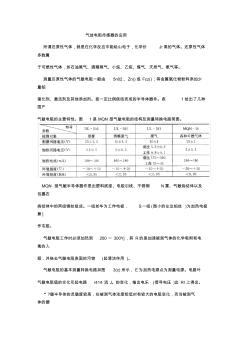
气放电阻传感器的应用 所谓还原性气体,就是在化学反应中能给山电子,化学价 Jr高的气体。还原性气体 多数属 于可燃性气体,如石油蒸气、酒精蒸气、小烷、乙烷、煤气、天然气、氢气等。 测量还原性气体的气敏电阻一般由 5n02、Zn()或 Fcz();等金属氧化物粉料添加少 量铂 催化剂、激活剂及其他添加剂。按一定比例侥结而成的半导体器件。表 1给出了几种 国产 气敏电阻的主要特性。图 1是 MQN 型气敏电阻的结构及测量转换电路简图。 MQN 型气敏半导体器件是出塑料底座、电极引线、不锈钢 N罩、气敏烧结体以及 包裹衣 烧结体中的两组铜丝组成。一组如华为工作电极, S一组 (图小的左边铂丝 )为加热电极 兼 ] 作屯极。 气敏电阻工作时必须加热到 200 一 300Yj,其 R的是加速被测气体的化学吸附和电 离的入 程,并烧去气敏电阻表面的污物 (起清洁作用 )。 气敏电阻的基本测量
industrial impact of the GMR and related spin electronics effects is presented in Section 6. Finally, the Curriculum Vitae of Albert Fert and Peter Gr ü nberg are given in two Appendices. 2. The GMR effect The magnetoresistance is the change of electrical resistance of a conductor when subjected to an external magnetic field. In bulk ferromagnetic conductors, the leading contribution to th
热门知识
湿敏电阻传感器-
话题: 工程造价linshuang6
-
话题: 地产家居robinwei1113
-
话题: 地产家居chenhuafei
精华知识
湿敏电阻传感器-
话题: 工程造价wjl19870515
最新知识
湿敏电阻传感器-
话题: 工程造价akinas2011
湿敏电阻传感器相关专题
- 洁顺80230c热敏打印机多少钱
- 预拌湿混砂浆与干混砂浆
- 遇湿易燃物不能用什么灭火
- 恒温恒湿实验室价格
- 湖北地区干湿土问题
- 家庭恒温恒湿系统价格多少
- 光敏三极管怎样测试
- 光敏二极管原理图
- 干湿计怎么用
- 干湿砂换算
- 基于CMOS工艺的二维风速传感器的设计和测试
- 应用于分布式光纤拉曼温度传感器的温度补偿电路
- 以太网POE交换机供电网口温湿度传感器使用说明书
- 光纤光栅传感器用于钢筋混凝土结构健康监测实验
- 关于改进红外线轴温探测设备车轮传感器安装尺寸
- 基于DS18B20数传温度传感器电缆防火测温系统
- 基于BRAGG光栅传感器混凝土梁应变检测试验
- 基于小波分析燃机排气温度传感器组故障诊断方法
- 基于无线传感器网络和GPRS无线远程监控系统设计
- 基于无线传感器网络技术智能家居报警系统设计
- 山东省化工工程师专业知识传感器考试试题
- 无线传感器网络技术在工业自动化监测中的应用
- 三相交流双电源电压传感器使用说明书
- 温湿度传感器
- M12防水插座、M12传感器插座、M12面板PCB插座
- ZigBee无线传感器网络在智能家居中的应用研究
- 常见传感器原理及应用